Skip to content

Nepal Hackathon

Help Nepal respond to the floods.

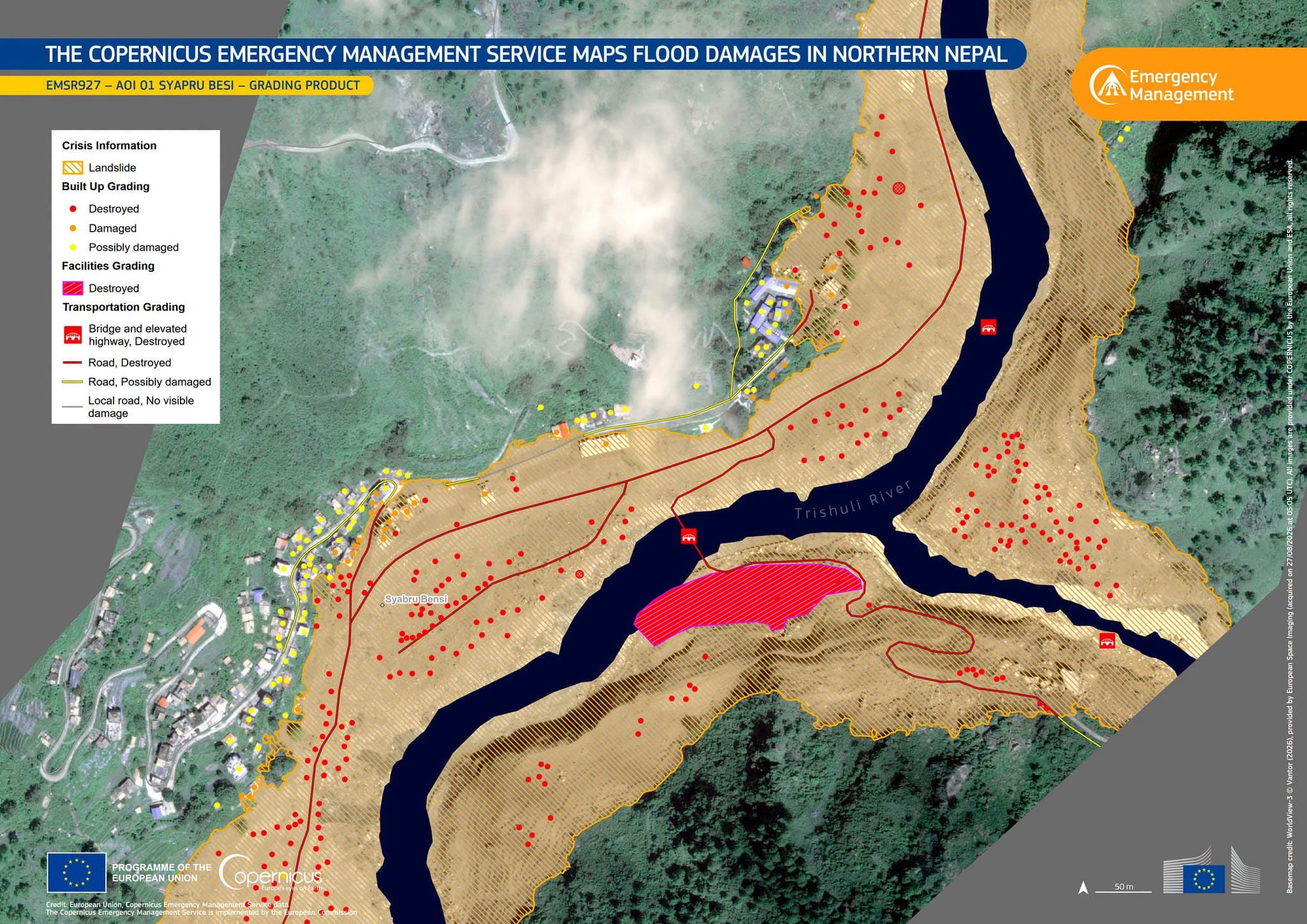
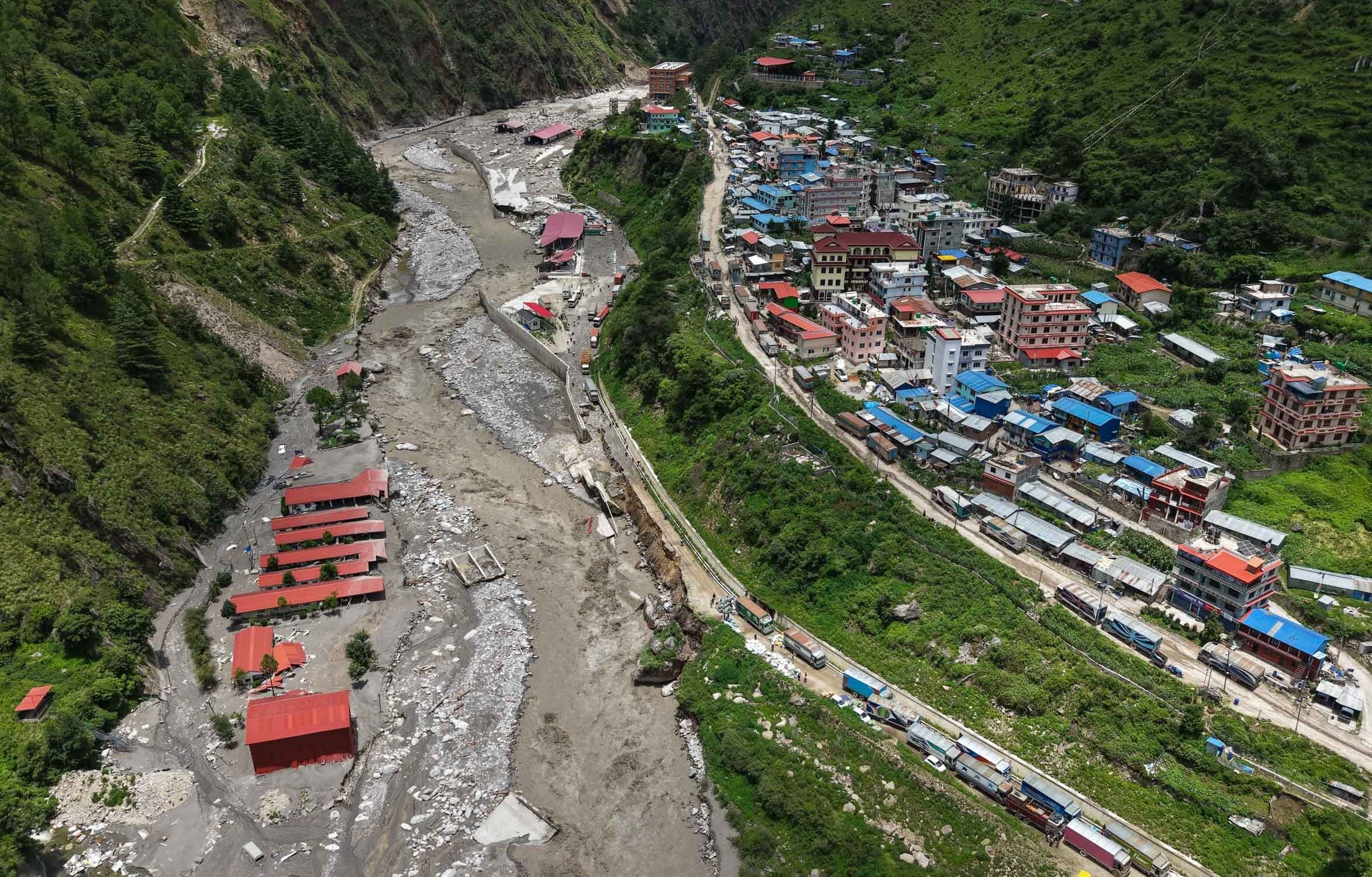
On 26 August 2026 a catastrophic flash flood tore through Rasuwa and the Bhote Koshi–Trishuli river system, devastating communities and critical infrastructure. Nepal’s responders and experts are already at work. Nepal Hackathon helps people, expertise, technology, data, compute and funding organise around what those teams say is useful — in real time and asynchronously, for the emergency now and the work that comes after.

Registration open

Kickoff ran Sunday 30 August, 09:00 NPT

Registering now puts you on the list for the next programme.

What is being built

Latest coverage

Read more coverage

Publishers’ own words and figures, not ours, and unverified by us.

01

What this is

Nepal’s responders are already at work.

Nepal’s responders and experts are already at work. Nepal Hackathon helps them draw on engineers, scientists, mappers, satellite data, AI, cloud infrastructure, funding and other resources from around the world — for the emergency now and the work that comes after.

Satellite scenes waiting to be turned into damage maps. Gauge readings, weather records and melt signals sitting in separate systems. Drone footage arriving faster than anyone can process it.

  • Put scattered expertise on one problem

    Hydrologists, mappers, engineers, translators and software people — in Nepal and outside it — rarely end up working on the same thing. Each event puts them there, and keeps a record of who works on what.

  • Pool the resources, not just the people

    Compute, satellite tasking, connectivity and funding are far easier to unlock together than one team at a time. Doing that collectively is a large part of what a platform is for.

  • Start the next one further along

    Known data sources, known contacts, known gaps, and people who have already worked together. That is what makes the second event faster than the first.

  1. 01

    Start with the people already responding

    Teams in Nepal explain what is happening, what is already under way and where additional help would actually be useful. New contributors organise around those needs.

  2. 02

    Bring expertise and resources together

    Engineers, scientists, mappers and software teams work alongside access to compute, satellite imagery, connectivity, equipment and funding.

  3. 03

    Current needs and future preparedness

    Teams work in real time and asynchronously. Some focus on urgent needs; others build for the future on warning systems, risk mapping, recovery and longer-term resilience.

Read the briefBhote Koshi–Trishuli flood response · Kickoff Sunday 30 August, 09:00 NPT
02

How it works

Led from Nepal. Open to the world.

Four steps, and the last one is the point. Most of what gets built at a hackathon dies on Monday. Here it does not, because somebody is already waiting to use it.

  1. 01

    Start with the people doing the work

    Responders, researchers, engineers, drone operators and institutions in Nepal explain what is happening, what already exists, where the gaps are and what additional help would actually be useful.

  2. 02

    Build the team around the problem

    Tell us what you know and how much time you have. We match engineers, scientists, mappers, designers and other contributors to problems where their skills can be useful — before the work begins.

  3. 03

    Work live. Keep working async.

    Teams use the event to move quickly together, then keep going across countries and time zones. They might map, analyse data, process imagery, build tools, find resources or work through longer-term technical problems.

  4. 04

    Keep useful work moving

    If the work is valuable, it does not stop when the event ends. Nepal-side teams and contributors can keep it moving, with additional funding, compute, technology and expertise brought in as needed.

03

Ground rules

Five things we hold to.

They apply to every event, and to anything built at one.

  1. 01

    The agenda comes from Nepal

    Work is scoped by the people already doing it. If you arrive with a solution looking for a problem, we will point you at the list instead.

  2. 02

    Show your sources

    Anything we publish names where it came from, when, and how confident we are. Work that cannot say what it is based on does not go out under our name.

  3. 03

    No risk scores on named places

    We do not publish hazard ratings or evacuation guidance for particular settlements. A wrong number next to a village name moves people, and that call belongs to the authorities who are accountable for it.

  4. 04

    Build for the handover

    A prototype nobody in Nepal can run is a weekend spent on yourself. Find the owner early and build something they can actually keep.

  5. 05

    Nothing that identifies a person

    No missing-person lists, no casualty records, nothing that names or locates someone affected. This holds for prototypes as firmly as it holds for the site.

04

Take part

Tell us what you can do.

Two minutes. It goes to the Nepal-side Problem Leads so they can match you to a team before the kickoff — and it puts you on the list for whatever we run next.

  • What you know, and what you can commit
  • Whether you can make the kickoff call
  • Anything concrete you can offer — compute, data, equipment
  • Your LinkedIn, if you want to be listed publicly
Register

Free. Open to anyone, anywhere.

Call link emailed once the platform is confirmed.

05

Who is joining

Who is already in.

Live from the registration list. Names show only for people who asked to be listed, so expect fewer faces than the count beside them.

Registered
91
In Nepal, on the response
30
Listed publicly
48
Areas covered
6
  • AI and engineering52
  • Data and GIS35
  • Product and design28
  • Communications24
  • Cloud and compute16
  • Drones and remote sensing11
  • Nischal Kafle

    Climate science · AI and engineering · Product and design

  • Amrit Bista

    Product and design · Communications · Fundraising · Field operations in Nepal

  • Amrit Marasini

    Data and GIS · Drones and remote sensing · Translation (Nepali or other languages of Nepal)

  • Suryodaya Bikram Shahi

    AI and engineering · Product and design

  • Shruti Patel

    Data and GIS · AI and engineering · Product and design · Cloud and compute

  • Shashank Kumar

    Data and GIS · AI and engineering · Product and design

  • Ganga Adhikari

    AI and engineering

  • Jerry

    Data and GIS · AI and engineering · Communications

  • Bimala Sigdel

    Data and GIS · Drones and remote sensing

  • Samip

    Data and GIS · Product and design · Communications · Fundraising · Private-sector partnerships

  • athif sayyaf

    Data and GIS · Climate science · Drones and remote sensing

  • MIN BAHADUR KARKI

    Data and GIS · Product and design · Communications · Field operations in Nepal

  • Prayash Limbu

    Data and GIS · Drones and remote sensing

  • Geebim

    Data and GIS · Drones and remote sensing

  • Bibek K C

    AI and engineering

  • Aadesh kumar jha

    Climate science · AI and engineering · Cloud and compute · Private-sector partnerships

  • Samir Raut

    Data and GIS · AI and engineering · Cloud and compute

  • Prashant Mahato

    AI and engineering

  • Anuj Acharya

    Cloud and compute

  • Mamata Adhikari Adhikari

    Product and design · Communications · Fundraising

  • Subal Ghimire

    AI and engineering

  • Pratyush Neupane

    Data and GIS · AI and engineering · Translation (Nepali or other languages of Nepal)

  • Mizanur Rahman

    Data and GIS · Drones and remote sensing

  • Bibek Thapa

    AI and engineering · Cloud and compute

  • Pradip

    Cloud and compute

  • Sardul Bhattarai

    Field operations in Nepal

  • Sahas shah

    AI and engineering · Product and design · Translation (Nepali or other languages of Nepal)

  • Marina kc

    Communications

  • Divyansh Giri

    AI and engineering

  • Sashank Khaling

    Communications · Field operations in Nepal

  • Rahul Mahatha

    AI and engineering

  • Shrija Shrestha

    Data and GIS · Field operations in Nepal

  • Ayush Dhungel

    Data and GIS

  • Rakesh Mahato

    Field operations in Nepal

  • Shrija Guragain

    Data and GIS · Climate science · Drones and remote sensing

  • Vipasha singh

    Data and GIS · AI and engineering

  • Ashim Poudel

    Product and design · Fundraising

  • Basanta Raj Adhikari

    Data and GIS · Climate science · Drones and remote sensing

  • Bishal Gurung

    Product and design · Drones and remote sensing

  • Bishal Acharya

    AI and engineering

  • Sachin Udas

    AI and engineering · Economics · Communications

  • Dilisha Panta

    AI and engineering

  • Anup Khanal

    Data and GIS · AI and engineering · Communications · Translation (Nepali or other languages of Nepal)

  • Prasanna Guragain

    AI and engineering · Communications · Cloud and compute

  • Mandil Bista

    Communications

  • Kristi Panta

    Data and GIS · Product and design · Communications

  • Prabal

    Product and design · Communications

  • Suryaraj Timsina

    AI and engineering · Cloud and compute

No photographs: a LinkedIn profile picture cannot be fetched from a pasted URL, only through a sign-in each person completes themselves. Initials are the honest stand-in.

06

Writing

What we are learning.

What was built, what worked and what did not — written down by the people doing the work.